Bangladesh's digital access widens as mobile phone, internet use grow
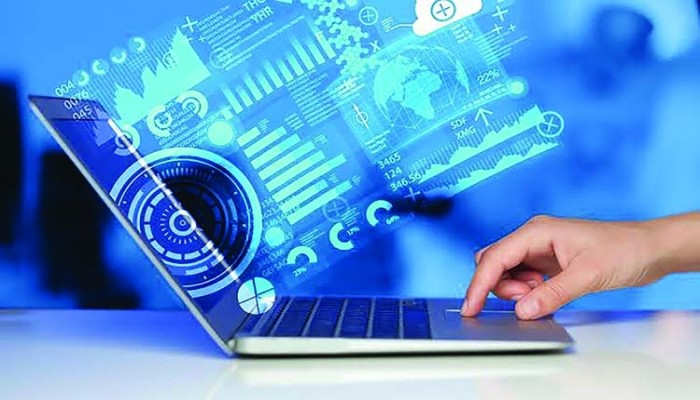
 Symbolic Image
Bangladesh is witnessing broader digital participation as both individual internet use and overall subscriber numbers continue to rise, with mobile phones remaining the dominant gateway to online services, according to official statistics.
Separate data from the Bangladesh Bureau of Statistics (BBS) and the Bangladesh Telecommunication Regulatory Commission (BTRC) showed that the expansion is reflected both in individual use of digital services and in the growing number of internet and mobile phone subscribers.
Internet use among people aged five and above rose to 59.2 percent in April-June 2026, from 55 percent a year earlier, while mobile phone use reached 89.6 percent from 88.2 percent, according to the fourth-quarter report of the BBS ICT Use and Application Survey 2025-26. Smartphone penetration also increased, to 75.1 percent during the quarter from 74.8 percent a year earlier.
At the household level, mobile phone access remained nearly universal at 99 percent, with 98.2 percent of households relying on mobile phones alone, compared with 98.1 percent a year earlier.
BTRC data showed this mobile-led expansion continuing at the subscriber level as well. Total internet subscribers reached 137.66 million in August 2026, up from 128.99 million in January, with internet penetration rising to 77.89 percent from 73.28 percent over the same period.
Mobile internet subscribers increased by 8.04 million to 122.26 million, while broadband subscribers through ISP and PSTN connections rose to 15.40 million from 14.77 million.
The mobile network is also shifting decisively from 3G to 4G. The number of 4G subscribers rose to 122.71 million in August from 113.49 million in January, while 3G subscribers fell to 1.05 million from 2.12 million. Mobile broadband penetration, covering both 3G and 4G users, increased to 61.94 percent from 57.70 percent.
The overall mobile subscriber base grew to 191.09 million in August from 185.80 million in January, an increase of 5.29 million, while overall teledensity, covering voice and internet, rose to 108.27 percent from 105.71 percent.
The BBS survey, however, points to a gap between digital access and device ownership. While 89.6 percent of people used mobile phones, only 65.6 percent owned one, up from 64.2 percent a year earlier, indicating a significant share of users depend on phones owned by others.
The expansion of digital access has also yet to translate into comparable growth in computer use.
Individual computer use rose only marginally to 11.8 percent from 11.6 percent, while household computer ownership declined slightly to 9.1 percent from 9.2 percent. Household internet access also fell to 58.2 percent from 59.7 percent a year earlier, even as individual internet use increased.
Fixed-line communication continued its decline, with only 0.7 percent of households reporting a fixed-line telephone in the latest quarter, down from 0.9 percent a year earlier.
The BBS is conducting its survey under the "Measuring District-wise ICT Access and Use at Individual and Household Level" project, using computer-assisted personal interviewing and producing district-level estimates for the first time.
Data are collected quarterly from 2,568 sample areas, with 24 households in each area, covering 61,632 households a quarter and 246,528 households a year.
The 2025-26 survey is the second round of the series, following 2024-25, and is intended to support ICT policymaking and reporting to the International Telecommunication Union, including 22 indicators for monitoring the Sustainable Development Goals.
--BSS

 Symbolic Image